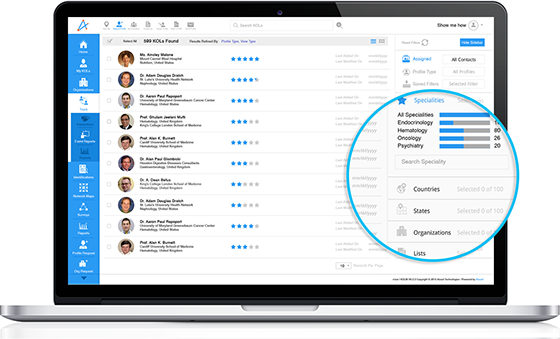
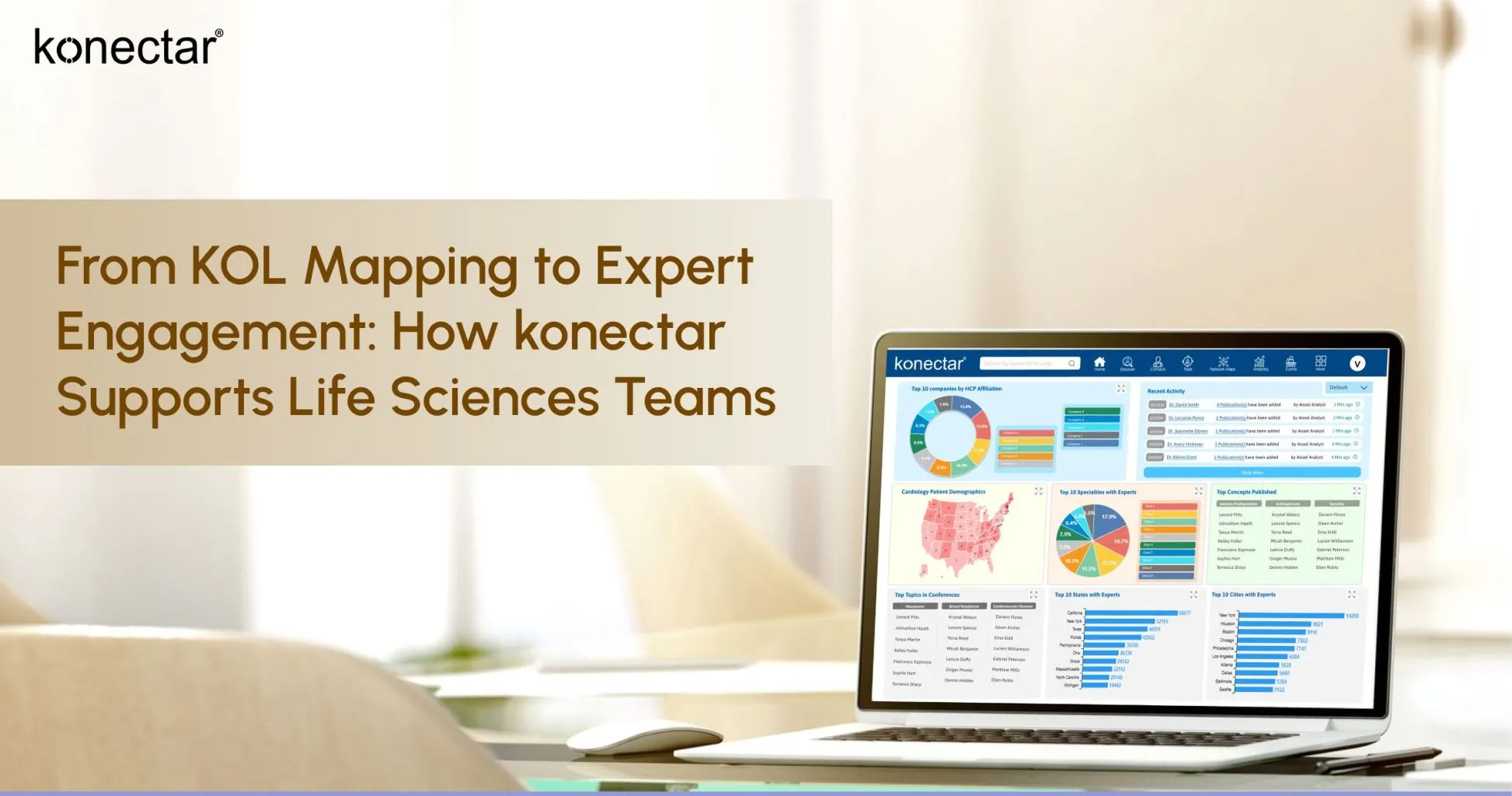

KOL mapping is the first step in a KOL engagement strategy. Whether the objective is to identify speakers, investigators, clinicians, scientific experts, or influential voices on social media, life sciences teams need to identify the experts who are most relevant to their objectives. ... Read this blog
The importance of analytics in today’s Medical Affairs landscape cannot be overstated. Medical Affairs teams work with large volumes of information on healthcare professionals (HCPs) such as analyzing their areas of expertise, research interests, scientific activity, and engagement history. ... Read this blog
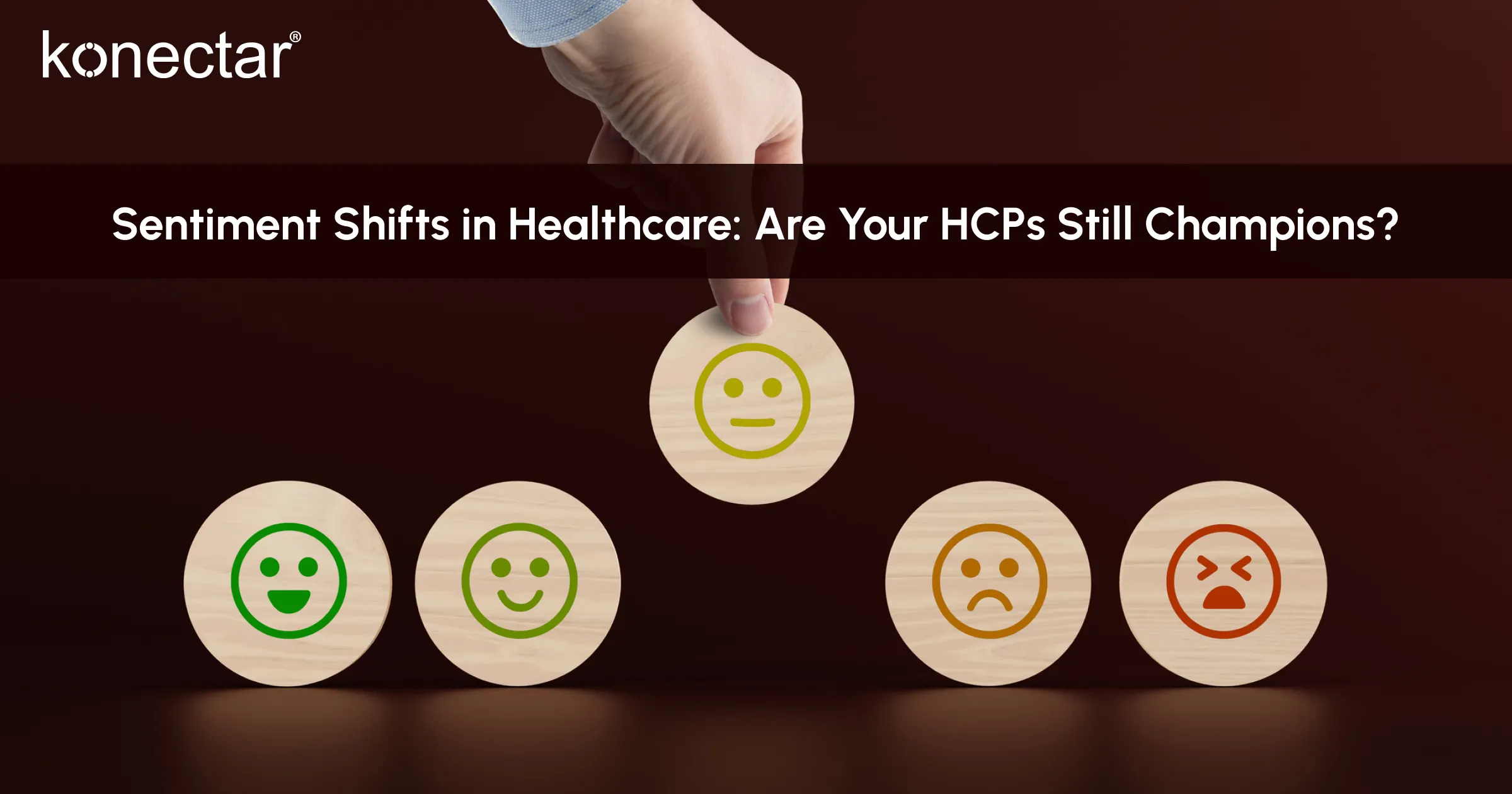
In life sciences, one of the most underestimated risks a Medical Affairs or Commercial team can face is that their strongest HCP advocates quietly stop believing in a brand. The gradual drift from an enthusiastic champion to passive observer to, in some cases, a voice that now amplifies a competitor. ... Read this blog
If you observe teams at a medtech organization preparing for an upcoming quarterly review or strategic meeting, you will often see a common scene - teams pulling out accounts and contact history from different places. This includes disconnected systems, personal notes along with a shared spreadsheet the team maintains, and a set of emails. ... Read this blog

The adoption of life sciences-specific CRM built around HCP engagement is growing faster. It is enabling teams to look for more data-driven, structured, and compliant ways to manage relationships. ... Read this blog
For MSL teams, every HCP relationship carries a history, context, and engagement need. As teams expand their networks, managing these details consistently can become difficult without the right infrastructure. ... Read this blog
Emerging biotech companies face a different problem related to KOL management than large life sciences companies do, and it is not just a matter of scale. ... Read this blog
Medical Affairs is one of the most HCP-centric functions within life sciences. Every part of the process, from identifying the right experts to driving engagement and measuring its impact depends on how well a team understands and manages its relationships with healthcare professionals. When relationship data is spread across spreadsheets, inboxes, and disconnected systems, even experienced MSL and Medical Affairs teams struggle to see the full picture. ... Read this blog
Medical affairs has become a more accountable and visible function within the broader organization. Hence, the role of Medical Science Liaisons has also evolved considerably. The growing complexity of therapeutic areas means a single trial readout or data release can reshape an entire engagement strategy overnight. So there’s a little room for generic targeted outreach. Yet most teams are still operating with processes built for an earlier version of the role that was focused more on relationship management and less on strategic accountability. ... Read this blog
Choosing a CRM for life sciences teams once meant picking a system that stores contacts, tracks interactions, and generates a few reports for leadership. Today that calculus no longer holds. Medical Affairs, Commercial, and Field teams now manage increasingly complex stakeholder ecosystems, from Key Opinion Leaders and investigators to advocacy groups and cross-functional internal teams. ... Read this blog
Agentic AI in life sciences refers to AI systems that can independently plan, reason, retrieve trusted scientific data, and execute multi-step workflows to achieve a defined objective. It enables pharmaceutical, biotech, medtech, and diagnostics teams to automate complex tasks, access actionable insights faster, and make more informed decisions with minimal manual intervention. ... Read this blog
Medical congresses are among the most information-dense environments in life sciences. Within the span of three to five days, a single event can bring out pivotal clinical trial readouts, shift the scientific consensus in a therapeutic area, reveal a competitor's evolving narrative, and elevate a handful of emerging voices into influential KOLs. Yet for most organisations, a significant portion of that value goes uncaptured. ... Read this blog
Recommended