31-12-2024
How Top KOL Management Companies Are Revolutionizing Pharma Marketing
With several HCP management software solutions emerging in the market, a few top KOL management companies stand out for focusing on what truly matters. They provide comprehensive insights into the HCP landscape — from precise KOL identification to deep engagement analytics. These companies are now evolving into intelligence partners to power global medical engagement strategies.
In this article:
KOLs in Pharma Marketing
KOLs are instrumental figures in pharmaceutical marketing due to their deep knowledge, professional network, and peer respect.
They assist pharma companies by:
1. Advocating for New Treatments : KOLs educate peers through medical conference presentations, journal publications, and peer discussions. KOL management companies streamline these engagements and ensure consistency in advocacy efforts.
2. Providing Feedback : KOLs offer critical insights during drug development, helping teams refine drug design, dosage, and real-world applications to ensure greater efficacy and drug safety.
3. Facilitating Clinical Trials : KOLs accelerate the process of patient recruitment and ensure adherence to protocols, thereby speeding up trials and reducing costs.
4. Building Trust : As respected medical community members, KOLs help build and maintain trust in the pharmaceutical company’s product.
Why Effective KOL Identification Matters
Identifying the right KOLs is essential for pharma companies because these individuals significantly influence medical practice and treatment protocols. Effective KOL identification helps in:
1. Enhances Scientific Credibility: Partnering with the right KOLs helps brands gain trust and strengthen their position in the scientific community.
2. Drives Informed Engagement: Accurate KOL identification ensures teams connect with experts who truly influence research, publications, and treatment decisions.
3. Improves Resource Efficiency: Targeting relevant experts avoids scattered outreach efforts and helps optimize time and budgets.
4. Supports Evidence-Based Strategy: Understanding each KOL’s research focus, collaborations, and publication activity enables data-driven engagement planning.
5. Amplifies Research Impact: The right voices can expand the reach of clinical data, drive scientific conversations, and accelerate real-world adoption.
Why Traditional KOL Identification Methods Fall Short Today?
Traditional means of KOL identification involve significant challenges that can hinder the effectiveness of pharma marketing strategies in the following ways:
1. Fragmented Data : Information about potential KOLs is scattered across various sources, making it difficult for Medical Affairs teams to view their influence and expertise comprehensively.
Modern KOL management software tools address this challenge by consolidating data from multiple sources into a unified platform.
2. Regional Variations : There are vast differences in medical practice standards and healthcare systems across regions. These differences can complicate the identification of relevant KOLs who are genuinely influential in specific therapeutic areas.
3. Subjective Criteria : Traditional means of KOL identification and profiling relied heavily on subjective judgments such as personal network or reputation, which did not always accurately reflect a potential KOL's true expertise or influence.
Importance of AI for Precise KOL Identification
Artificial Intelligence (AI) has emerged as a powerful tool for overcoming the limitations of traditional KOL identification methods. Leveraging AI for KOL identification and profiling allows pharma companies to enhance the precision and efficiency of their outreach efforts.
Data-driven strategies ensure that Medical Affairs teams engage the most impactful individuals in their respective fields. This shift has streamlined operations, significantly improving the effectiveness of pharmaceutical marketing campaigns.
1. Data Integration : AI tools can aggregate and analyze data from diverse sources, including publications, trial databases, and conference presentations, to create a comprehensive profile of potential KOLs.
2. Objective Analysis : Integrating machine learning algorithms allows AI-driven tools to evaluate the influence and expertise of individuals based on objective criteria such as citation count, collaborative networks, and the impact of their research.
3. Predictive Modeling : Predictive models can predict emerging KOLs by analyzing current trends and patterns in data and identifying upcoming experts who might not yet be widely recognized.
4. Scalability : AI tools can process vast amounts of data quickly and accurately, allowing pharma companies to identify and engage with KOLs globally and in real-time.
Key Criteria for Evaluating KOL Identification Companies
To evaluate potential KOL identification partners, pharma companies must consider several key criteria to ensure that the chosen candidates can provide reliable, insightful, and actionable guidance.
Data Integrity and Sources
The foundation of effective KOL identification lies in the quality of data used. Pharma teams must ensure:
1. Comprehensive Data Collection : Teams must utilize various sources, including scientific publications, patent filings, clinical trial data, and conference presentations, to form a holistic view of potential KOLs.
2. Data Verification : The team must ensure that the data collected is verified for accuracy and recency to maintain the reliability of the insights derived from it.
3. Transparency : The sources of data and the methods used for data collection should be transparent to ensure the integrity of the KOL identification process.
AI and Analytics Capabilities
AI and advanced analytics are essential for processing complex datasets and providing actionable insights.
Comprehensive Analytical Tools
While evaluating the KOL identification companies, assessing the depth of analytical tools they offer is imperative. This includes:
1. Multifactorial Analysis : The company offering KOL identification must have the capacity to perform complex analyses that incorporate multiple data points, including speaking engagements, social media influence, and clinical trial involvement, to provide a comprehensive view of KOL’s reach and influence.
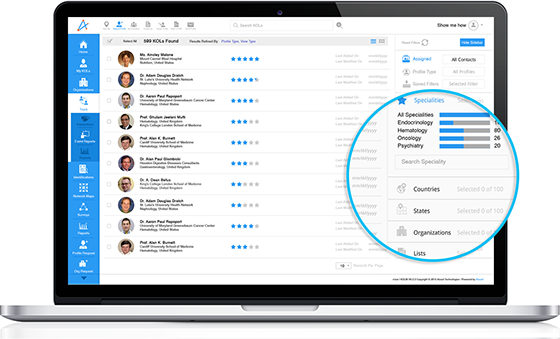
2. Visual Analytics : Effective visualization tools allow pharma teams to see networks of KOLs, their connections, affiliations, and activity levels. This enables pharma companies to understand the influence landscape better and plan engagement strategies accordingly.
Customization and Flexibility
While evaluating KOL management companies, it is imperative to consider their ability to customize their solutions to meet the specific needs of pharma teams. This involves:
1. Tailored Algorithms : The company should be able to adjust its models and algorithms to focus on therapeutic areas, geographical regions, and other specific criteria.
2. Flexible Engagement Models : The company should offer flexible models that can be adapted to the changing dynamics of company projects. Whether these projects relate to scaling up for a global drug launch or focusing on a niche therapeutic area.
Real-time Data Processing
Processing and analyzing data in real-time is crucial for effective KOL identification. The fast-paced nature of pharmaceutical industries compels the teams to consider the following:
1. Speed of Insights : Evaluating the speed with which the offered solution can turn raw data into actionable insights will give the teams an idea about the relevancy of the engagement solution. Faster processing significantly impacts the timeliness of the strategies deployed.
2. Dynamic Updating : The offered solution should be able to update its databases as new information becomes available. This ensures that KOL strategies are based on the most current data.
How to Choose the Right KOL Identification Partner
Choosing the right KOL identification partner depends upon several criteria, such as:
Checklist for Evaluating Potential Partners
Selecting a KOL identification partner involves having a comprehensive checklist to streamline decision-making. Key items to consider are:
1. Expertise and Experience : Assessing the years of experience and the company's expertise in specific therapeutic areas can narrow the list considerably.
2. Technology and Tools : Evaluating the sophistication and nuances of the product and its technology will also help determine which company offers the right tools.
3. Client Testimonials and Case Studies : Seeking feedback from previous clients and reading up on detailed case studies can demonstrate the company’s capability to deliver measurable results.
Evaluation of the Onboarding Platform
Once the checklist has been exhausted, evaluating the individual capabilities of the potential onboarding platform can lay a solid foundation for establishing a mutually beneficial relationship with the KOL identification partner. Points to consider here are:
1. Ease of Integration : The platform should be able to integrate seamlessly with the existing IT infrastructure, CRM systems, and other management tools without needing extensive modifications.
2. User Training and Support : Potential KOL identification partners should offer comprehensive training for the active users of the team. In addition, they should also have easy access to customer support teams to ensure addressing issues that arise during and after the integration process.
3. Personalization Options : The platform should be easily customizable, which allows the software to be tailored to meet specific operational and strategic needs.
Aligning Organizational Goals with KOL Strategy
Before finalizing a solution, ensuring that the KOL strategy aligns with the broader pharma marketing goal is essential for maximizing the effectiveness of efforts. This includes strategic consultations with the partner to understand how their solution can support KOL engagement.
Discover the full potential for your pharmaceutical initiatives with konectar, an AI-driven solution for identifying and engaging KOLs. Our platform combines data analytics with integration to streamline the KOL discovery and engagement process. Experience the power of targeted, tailored strategies and seamless integration that konectar offers.
Request a demo today and transform your KOL strategy into a competitive advantage.
Key Takeaway
The ability to effectively identify and engage with KOLs is crucial for the ever-evolving pharmaceutical industry.
Leveraging advanced technologies such as AI, integrating comprehensive data analysis tools, and ensuring cultural and geographical relevance are key to enhancing KOL strategies.
By choosing the right KOL identification partner, pharmaceutical companies can ensure they are equipped to meet the challenges of today's global healthcare landscape and ultimately improve patient outcomes.
konectar stands at the forefront of this transformation, offering tailored, data-driven solutions that empower pharma companies to navigate the complexities of KOL engagement with confidence and precision.
FAQs
- What is a KOL identification company?
A KOL identification company offers specialized tools to identify and profile influential individuals within specific therapeutic fields.
-
How do KOL identification tools use AI?
KOL identification tools leverage AI to enhance the efficiency and accuracy of identifying and engaging with KOLs in healthcare.
-
What are the benefits of partnering with specialized KOL identification companies?
The benefits include global reach, measurable ROI and impact, scalability and flexibility, efficient resource allocation, and improved engagement efforts.
-
What are the criteria for choosing the right KOL identification partners?
Criteria differ from organization needs, but standard criteria involve having a checklist for evaluating potential partners, assessing the onboarding platform, and ensuring that the KOL strategy aligns with the broader organizational objectives.


Recommended