26-08-2026
Why do MSL teams of Pharma and Biotech companies need a CRM
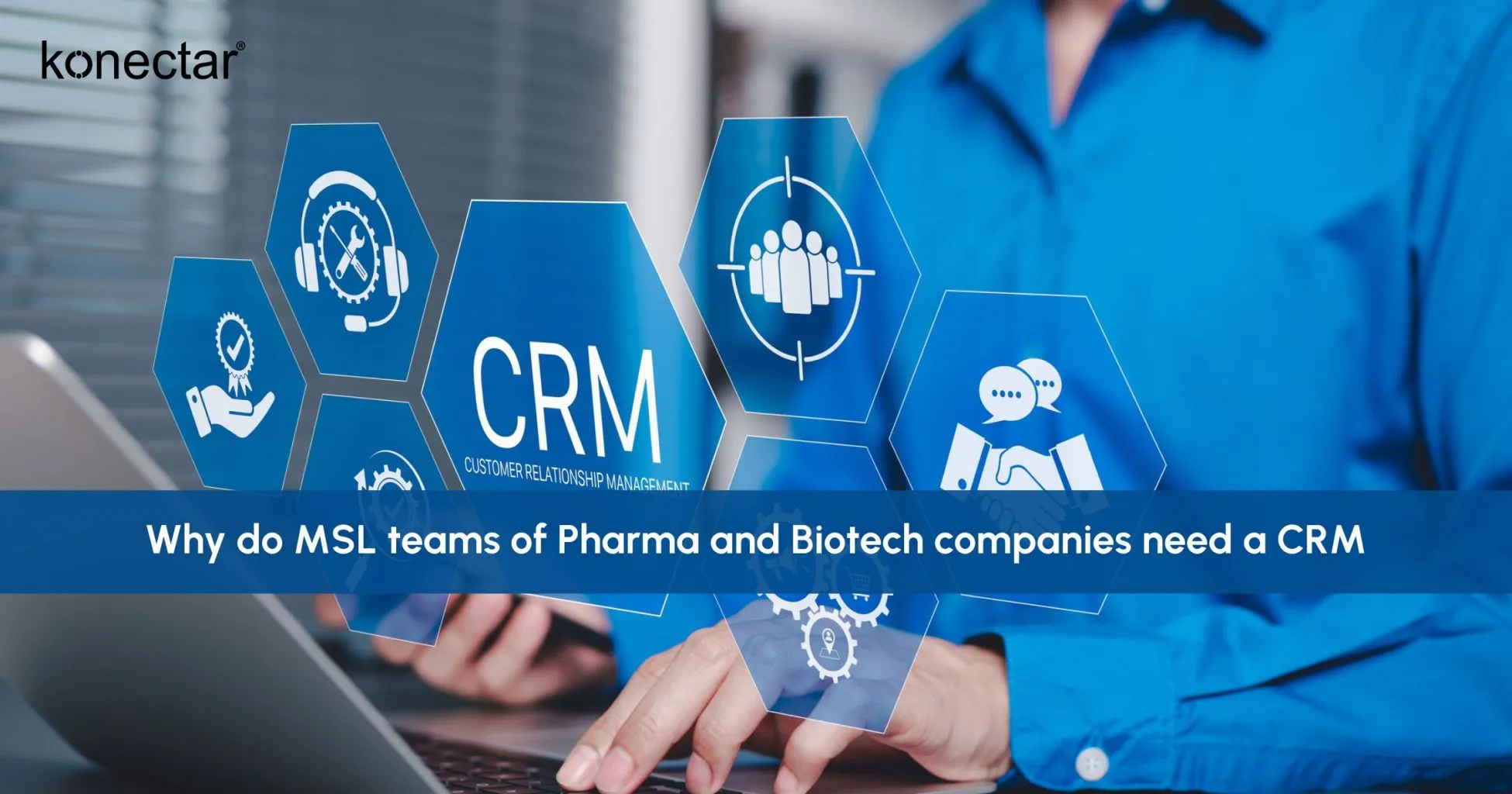
For MSL teams, every HCP relationship carries a history, context, and engagement need. As teams expand their networks, managing these details consistently can become difficult without the right infrastructure. A Medical Affairs CRM provides a structured environment to organize relationship information, support engagement planning, and enable more informed HCP interactions. Here are six ways a CRM can help MSL teams strengthen their HCP engagement process.
In this article
- 6 Ways CRM Supports Effective HCP Engagement
- konectar CRM: Built for Smarter HCP Engagement
- Conclusion
- FAQs
6 Ways CRM Supports Effective HCP Engagement
Build a Complete View of Every HCP Relationship
HCP engagement is cumulative. Previous scientific discussions and follow-up commitments also hold the key to shape future interactions. When this information is scattered across individual notes, emails, spreadsheets, or disconnected systems, MSLs may have to spend valuable time reconstructing the history.
A CRM meant for MSLs provides the team with a consistent view of engagement history, allowing them to access relevant context when preparing for subsequent interactions.
Make Engagement Planning More Relevant
Effective HCP engagement is about ensuring that engagement is relevant to the HCP, the scientific context, and the stage of the relationship.
MSLs may need to manage a focused group of priority HCPs, but each relationship can have different objectives and dynamics. One KOL may be actively involved in clinical research, another may be an emerging voice within a therapeutic area, while another may have specific scientific interests that warrant continued dialogue.
Ability to define clear plans and objectives helps MSLs to chart out the purpose, capture what has been discussed and identify appropriate next steps.
Strengthen Coordination Across MSL Teams
Without a shared understanding of engagement, teams may unintentionally duplicate outreach or fail to recognize when another colleague is already developing a relationship with the same HCP. A CRM purpose-built for pharma teams offers greater visibility into ongoing engagement, helping them coordinate activity and establish clearer ownership where needed.
This does not mean every MSL needs visibility into or involvement in every HCP interaction. Instead, it provides enough organizational context to recognize where collaboration is appropriate and where engagement should remain with a particular MSL.
For growing biotech organizations, this can help reduce unnecessary overlap while ensuring that important HCP relationships do not fall between teams or regions.
Preserve Core Knowledge Through MSL Transitions
An experienced MSL may have built substantial knowledge about an HCP through years of scientific interactions. If that knowledge exists only in personal notes, much of it can be difficult to transfer when an MSL changes territory, moves to another role, or leaves the organization.
A CRM provides a more durable record of the MSL-HCP relationship, helping preserve the context generated through previous engagements. Newly recruited MSLs can review relevant history and understand the background of an HCP relationship without having to reconstruct it from the beginning.
For lean biotech teams, where a small number of MSLs may hold significant relationship knowledge, maintaining this continuity can be particularly important.
Give Medical Affairs Leadership Greater Visibility
Reliable engagement insights depend on reliable underlying data. Duplicate HCP records, inconsistent information, and fragmented engagement histories can make it difficult for both MSLs and Medical Affairs leaders to establish an accurate picture of HCP relationships.
A CRM meant for life sciences teams provides a more structured basis for understanding engagement across the organization.
For leadership, this can make it easier to assess questions such as:
- Are priority HCP relationships receiving appropriate attention?
- Where are engagement gaps emerging?
- How is engagement distributed across regions and teams?
- Which relationships may require follow-up?
- Is HCP sentiment improving, declining, or remaining stable?
- Where might additional field medical resources be needed?
konectar CRM can support this by bringing HCP and engagement information into a centralized environment. Greater visibility can help leadership gain a comprehensive and consistent understanding of engagement coverage.
Discover a smarter approach to HCP engagement. Explore konectar CRM
Turn Engagement Data Into Actionable Insights
When engagement information is consistently captured, teams can begin to identify broader patterns across HCP relationships. Teams may be able to understand where scientific conversations are concentrated, identify areas receiving comparatively less engagement, recognize recurring areas of HCP interest, and identify patterns that may require further attention.
This creates an opportunity to use CRM as a source of organizational learning rather than simply an administrative record of completed activities. Over time, this can help biotech and pharma organizations make better-informed decisions about engagement priorities, resource allocation, and broader field medical planning.
konectar CRM: Built for Smarter HCP Engagement
konectar CRM gives Medical Affairs and MSL teams a connected way to manage HCP relationships, engagement plans, objectives, and interactions. By bringing relationship context and engagement information together, it helps teams maintain continuity, identify gaps, and make more informed engagement decisions.
- Centralized HCP intelligence: Access HCP information, relationship history, and present engagement context in one place.
- Connected engagement planning: Link plans, objectives, interactions, and follow-ups to maintain continuity across the engagement lifecycle.
- Actionable analytics: Use dashboards and reports to identify engagement trends, gaps, priorities, and follow-up opportunities.
- Connected team workflows: Improve visibility across teams and reduce duplicate or inconsistent outreach.
- Configurable workflows: Adapt the CRM to different Medical Affairs structures, processes, and engagement needs.
- Better engagement decisions: Give MSL teams the context and visibility needed to prioritize relationships and plan more meaningful interactions.
Conclusion
The benefits described in the article become increasingly important as a life sciences organization grows. As the organization introduces new products, and engages a broader HCP network, informal approaches become harder to sustain.
konectar CRM helps MSL teams manage HCP relationships and make more informed engagement decisions as they scale. To see how konectar CRM supports MSL-HCP engagement initiatives, request a demo.
FAQs
- How is a CRM for MSL teams different from a general CRM?
A CRM designed for MSL teams is built around Medical Affairs workflows. It focuses on HCP and KOL relationships, scientific interactions, engagement objectives, and relationship context rather than commercial sales activities.
- Why do MSL teams of pharma and biotech companies need a dedicated CRM?
A CRM can help MSL teams maintain a reliable engagement history, reduce duplicate outreach, coordinate across functions, preserve relationship knowledge, gain insights, and also provide leadership with a clearer view of HCP engagement.
- How does CRM improve HCP engagement for life sciences teams?
A CRM gives MSLs access to relevant engagement history before an interaction, helping them understand if any previous discussions have happened. Teams can log in interactions, scientific interests, and follow-up requirements, which all can support more informed and purposeful engagement rather than relying on fragmented records.
- How does konectar CRM support MSL teams across biotech and pharma companies?
konectar CRM helps MSL teams access all information related to HCP engagement from a centralized environment. This supports greater visibility, improved coordination, and effective engagement.


Recommended