27-05-2024
A Look at the Latest Healthcare Trends
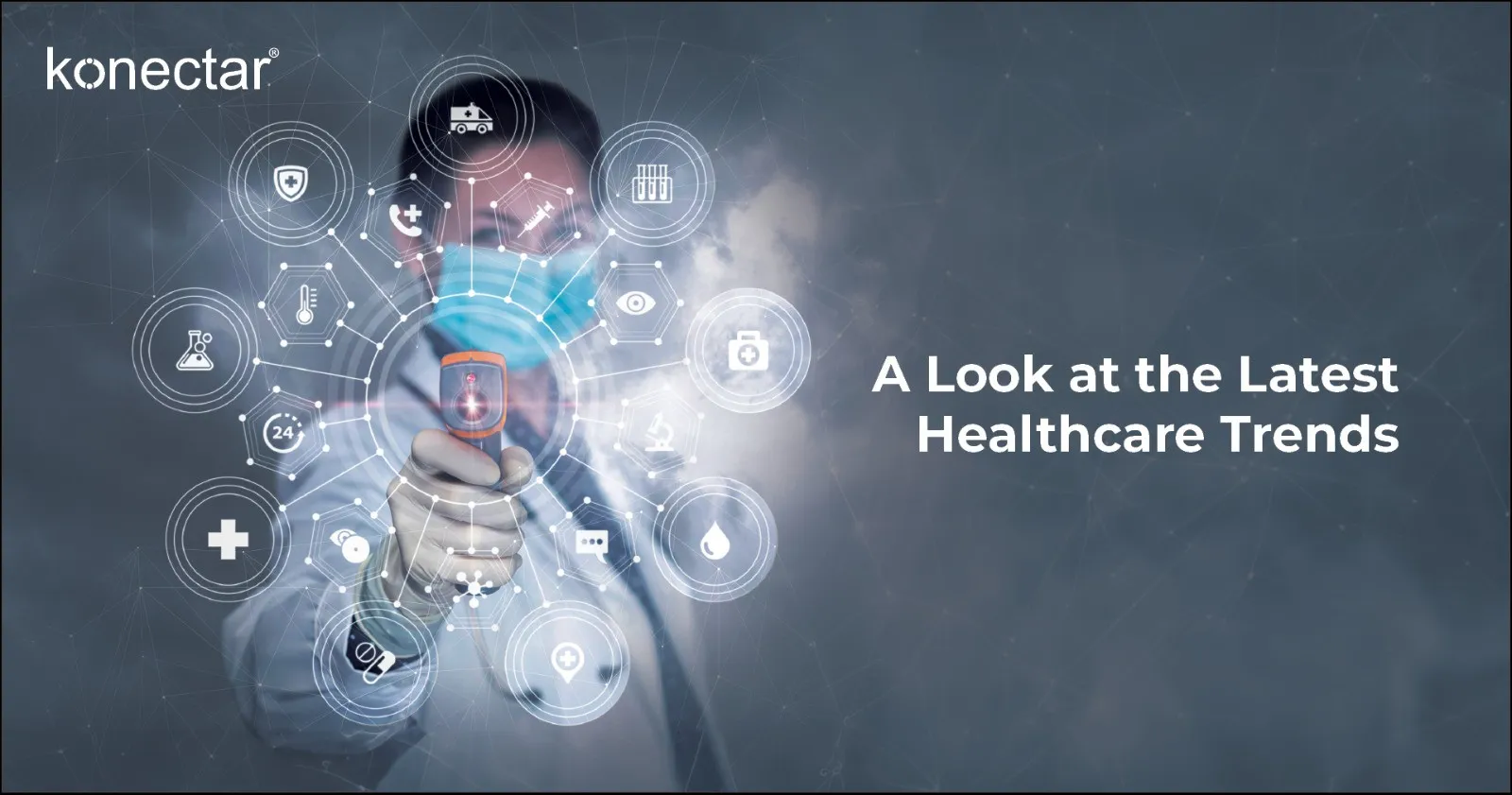
Healthcare is going through a major shift driven by digital systems, artificial intelligence, and data-led decision-making. What was once considered future technology is now actively shaping how care is delivered, how research is conducted, and how healthcare systems operate.
The focus is no longer just on treatment, but on earlier detection, better coordination, and continuous monitoring of patient health. This blog highlights some of the most important technological shifts shaping modern healthcare systems.
In this article
Key Healthcare Technology Transformations
Artificial Intelligence
Artificial intelligence is now widely used across healthcare systems, especially in diagnostics and clinical support.
It helps in analyzing medical images, identifying early signs of disease, and supporting clinical decision-making. AI systems also process large volumes of patient data to detect patterns that may not be visible through manual review.
In practice, AI improves speed and consistency, while allowing healthcare professionals to focus more on complex clinical judgment.
Predictive Analytics
Predictive analytics is helping healthcare shift from reactive treatment to preventive care.
It uses patient data, medical history, and population trends to identify potential health risks before they develop into serious conditions.
Healthcare providers use it to predict hospital readmissions, detect high-risk patients, and improve long-term disease management strategies.
Electronic Health Records (EHR)
Electronic Health Records have become a core part of modern healthcare infrastructure.
They digitally store patient information such as medical history, test results, prescriptions, and treatment notes.
This improves access to information across departments, reduces duplication of tests, and supports better coordination between healthcare providers.
Remote Patient Monitoring
Remote Patient Monitoring allows continuous tracking of patient health outside hospital settings.
It uses connected devices such as wearables, glucose monitors, and blood pressure trackers to collect real-time health data.
This approach is especially useful for managing chronic conditions like diabetes, heart disease, and hypertension, where ongoing monitoring is critical.
Digital Twins in Healthcare
Digital twin technology creates virtual models of patients, organs, or healthcare systems. These models are used to simulate treatment outcomes, test medical procedures, and improve clinical decision-making before applying them in real life.
This transformative technology is projected to be worth over $21.1 billion by 2028. This depicts its exponential growth and immense potential in the healthcare industry.
Telemedicine and Remote Care
Telemedicine has become a widely adopted method of delivering healthcare services.
It enables patients to consult doctors through digital platforms without visiting hospitals physically.
It is commonly used for follow-ups, routine consultations, and providing care in regions with limited healthcare access.
Telemedicine improves convenience for patients while reducing pressure on healthcare facilities.
Data-Driven Healthcare Systems
Healthcare professionals are increasingly dependent on data for decision-making and operational planning. Data is used to understand disease patterns, improve hospital efficiency, allocate resources, and support clinical decisions.
This shift is enabling more accurate, evidence-based healthcare delivery across both clinical and administrative functions.
Conclusion
Healthcare is steadily moving toward a more connected and data-driven model. Technologies like artificial intelligence, predictive analytics, remote monitoring, and digital health systems are reshaping how care is delivered and managed.
The overall direction is toward earlier intervention, improved efficiency, and more patient-centered healthcare systems.
FAQs
- What are the benefits of AI in healthcare?
AI helps detect diseases early, supports diagnosis, and improves clinical decisions. It also makes it easier to process large amounts of medical data quickly.
- How does predictive analytics improve patient care?
It uses past health data to predict future risks. This helps doctors detect diseases early, reduce hospital readmissions, and manage chronic conditions better.
- What do Electronic Health Records (EHR) do?
EHRs store patient medical data in digital form. They make information easy to access, reduce repeated tests, and improve coordination between doctors.
- How does Remote Patient Monitoring help patients?
It tracks patient health using devices at home. Doctors can monitor conditions in real time and respond quickly when needed, especially for long-term illnesses.
Read Next
Learn how clinical research is moving closer to patients through remote and hybrid trial models. 4 Key Benefits of Decentralized Clinical Trials


Recommended