28-10-2026
The Hidden Costs of Generic CRM Systems and How konectar CRM Fits Life Sciences Needs
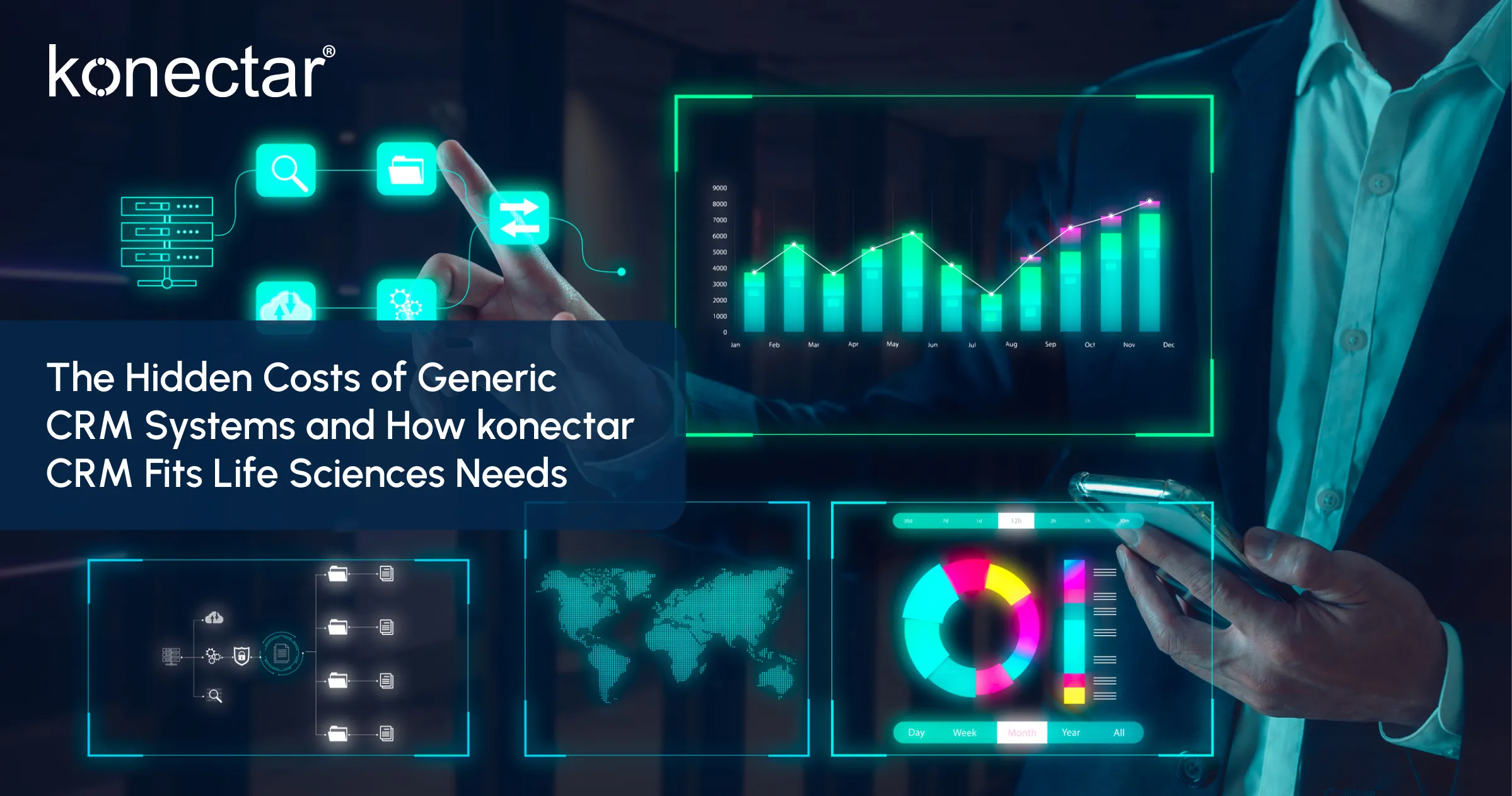
Choosing a CRM involves more than comparing license fees. For pharma, biotech, and MedTech organizations, adapting a generic CRM to life sciences requirements can add costs through customization, disconnected tools, manual processes, and user support.
A CRM built for life sciences can offer a more relevant starting point. Here are four hidden costs to consider when evaluating your options and how konectar CRM fits these requirements.
In this article
- Customization Costs for Life Sciences Workflows
- The Cost of Disconnected Tools and Manual Work
- Training and Ongoing Support Costs
- Limited Visibility into HCP Engagement Performance
- How konectar CRM Supports Life Sciences Teams
Customization Costs for Life Sciences Workflows
Generic CRM systems may require additional development to support specialized HCP engagement processes. Custom fields, workflow changes, and reporting modifications can add to implementation effort and create ongoing maintenance needs.
How konectar CRM fits: Purpose-built for life sciences, konectar CRM offers functionality aligned with HCP management and engagement workflows, with configuration options to accommodate specific business requirements.
The Cost of Disconnected Tools and Manual Work
When a CRM lacks the required capabilities, teams may turn to additional applications or maintain separate records for HCP profiles, interactions, engagement plans, and field observations. Switching between tools and updating information manually adds unnecessary work to everyday activities.
How konectar CRM fits: konectar CRM brings HCP profile management, interaction tracking, engagement planning, field insight capture, and more into one system, helping teams manage engagement activities without having to rely on multiple tools for these functions.
Training and Ongoing Support Costs
A CRM that does not align with users' day-to-day responsibilities can make onboarding more difficult and increase the need for ongoing training. Employees may also need additional guidance when adopting new workflows or resolving implementation-related questions.
How konectar CRM fits: konectar CRM is designed around life sciences workflows. A dedicated Customer Success Manager guides teams through implementation and ongoing use, providing support as teams adopt the solution.
Limited Visibility into HCP Engagement Performance
Teams may need to compile data manually to understand field activities, review engagement progress, and assess HCP interactions. This can make it harder to identify gaps, monitor performance, and make informed decisions.
How konectar CRM fits: konectar CRM provides visibility into HCP engagement through various reports. Teams can monitor engagement progress and assess HCP sentiment, advocacy, and beliefs toward their products to support engagement planning and performance assessment.
konectar CRM combines life sciences-focused capabilities with a dedicated customer success manager assigned to support to help organizations manage HCP engagement efficiently. Request a konectar CRM demo to explore its capabilities and see how they align with your organization's requirements.
Read Next
Sentiment Shifts in Healthcare: Are Your HCPs Still Champions?


Recommended