04-08-2026
The Biggest Challenges Facing Medical Science Liaisons, and How the Right Approach Solves Them

Medical affairs has become a more accountable and visible function within the broader organization. Hence, the role of Medical Science Liaisons has also evolved considerably. The growing complexity of therapeutic areas means a single trial readout or data release can reshape an entire engagement strategy overnight. So there’s a little room for generic targeted outreach. Yet most teams are still operating with processes built for an earlier version of the role that was focused more on relationship management and less on strategic accountability.
In this article:
- Identifying and Accessing the Right KOLs
- Fragmented Engagement Data and Lost Institutional Knowledge
- Demonstrating Measurable Impact
- Misalignment with Organizational Goals
- Adapting to Digital Systems
- How These Challenges Connect
- FAQs
MSLs today not just have to identify the right experts and engage them meaningfully but also demonstrate a clear link between their activity and strategic outcomes. Further, we break down some of the most common challenges MSLs face today, and how to resolve them.
Identifying and Accessing the Right KOLs
This continues to be a fundamental challenge for MSLs. The real issue isn't finding experts, it's identifying which ones are strategically relevant versus those who repeatedly surface through internal nominations. Also, as the scale of engagement quantity grows, manual research fails to keep pace, limiting both efficiency and the quality of expert engagement.
Solution:
Utilize tools that help eliminate manual KOL identification and provide comprehensive profiles. This will save time and resources while enabling teams to find the right KOLs that fit their objectives and drive high-quality engagement.
Fragmented Engagement Data and Lost Institutional Knowledge
MSLs juggle HCP engagements, evolving scientific literature, reporting, and activity documentation across fragmented systems, making these tasks time-consuming and also inefficient. The challenge becomes even more significant during territory transitions or employee turnover, when valuable relationship history and scientific insights are lost.
Solution:
MSL–KOL relationships should be captured within a unified CRM or a centralized platform that provides managers and leadership with visibility into all interaction records. This ensures valuable institutional knowledge is retained, even during territory transitions or employee turnover. It also gives teams clear visibility into ongoing KOL engagements and prevents duplicate outreach.
Demonstrating Measurable Impact
Leadership no longer measures success solely by the number of HCP meetings. They want to understand what scientific insights emerged, what changed, and how those insights informed decisions. MSLs have to piece together answers from disconnected notes or memory to provide reliable evidence during business reviews.
Solution:
Implementing a metrics framework to evaluate the quality and impact of MSL engagements can help. Monitor KPIs such as medical insights generated, changes in KOL sentiment and advocacy overtime, objective alignment, and field contributions through centralized dashboards. This enables continuous performance improvement and more informed decision-making.
Misalignment with Organizational Goals
MSL activities are often driven by individual priorities rather than a unified Medical Affairs strategy. This leads to inconsistent KOL engagement, missed opportunities, or focusing on areas that are not a priority at the moment.
Solution:
Managers should clearly communicate organization-wide objectives and broader business goals to MSLs. This will enable teams to prioritise activities that align with strategic objectives. Also there should be regular communication between MSLs, Medical Affairs leadership, and cross-functional teams to ensure consistent execution, stronger collaboration, and alignment across the organization.
Adapting to Digital Systems
Digital transformation in life sciences has introduced new platforms and workflows at a rapid pace. While MSLs are required to continually adapt to changing systems while maintaining productivity, and high-quality scientific interactions, most may struggle to use new tools effectively. This slows down adoption and limits the value of digital investments.
Solution:
MSLs should be provided with structured and continuous training whenever new technologies are introduced. Equip them with clear guidance, best practices, and readily accessible support to accelerate adoption. Regular feedback sessions, knowledge sharing, and user-friendly digital platforms can further help MSLs build confidence, improve productivity, and enhance scientific engagement.
How These Challenges Connect
If we look closely at the challenges above, a pattern emerges - none of them are skills problems. They are infrastructure problems. So the solutions do not lie in working harder but smarter. It's about having the infrastructure that absorbs the data work, so the MSL's time goes toward driving qualified scientific conversations and engagements.
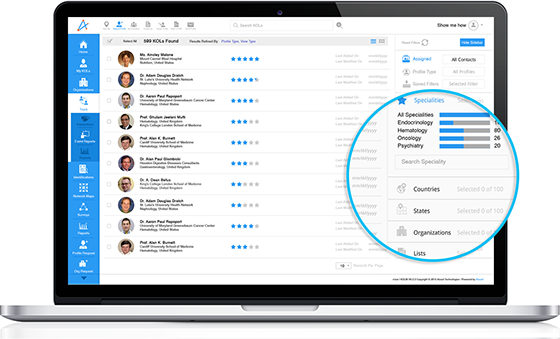
konectar fills that gap. The AI-powered platform is a one-stop solution for life sciences teams aiming to execute KOL management. Right from KOL identification and profiling, to capturing and tracking interactions to driving KOL engagement, konectar enables teams to execute the KOL lifecycle from just one platform. To learn more on how konectar can support MSLs with the KOL engagement process, request a demo of konectar.
FAQs
- What are the biggest challenges faced by Medical Science Liaisons today?
MSLs commonly struggle with identifying the right KOLs, managing fragmented engagement data, demonstrating measurable impact, aligning with organizational goals, and adapting to rapidly evolving digital tools and workflows.
- How can MSLs identify the right KOLs more efficiently?
Using AI-powered KOL identification platforms such as konectar enables MSLs to discover relevant experts based on scientific expertise, influence, and strategic fit, reducing manual research and improving engagement quality.
- Why is centralized MSL engagement data important?
A centralized platform preserves relationship history, scientific insights, and interaction records, eliminating the need to have multiple systems and preventing knowledge loss during territory transitions. This also gives leadership complete visibility into KOL engagement.
- How should MSL performance be measured?
Beyond activity metrics such as meeting counts, organizations should measure scientific insights generated, engagement quality, KOL sentiment, strategic contributions, and the impact of MSL activities on Medical Affairs objectives.
- How can technology improve MSL productivity?
Technology has enabled MSLs to reduce administrative work, improve collaboration with cross-functional teams, and allow MSLs to spend more time on meaningful scientific engagement.
Read Next
Learn how to prioritize and engage regional and global KOLs more effectively. From Regional to Global KOLs: How to Build a Tiered Engagement Model That Scales


Recommended