29-05-2026
Segmenting HCPs Beyond Prescribers: A Smarter Approach for Commercial Strategy
Most life sciences teams already know who the top KOLs are in their therapeutic areas. The real challenge today is understanding which experts matter for which objective, when to engage them, and how to build meaningful relationships at scale.
In this article
- Why Traditional KOL Segmentation Falls Short
- What Smarter KOL Segmentation Looks Like
- The Shift from Static Lists to Dynamic Segments
- Different Engagement Goals Require Different KOL Segments
- The Role of AI in Advanced KOL Segmentation
- How konectar Enables Smarter KOL Segmentation
- FAQs
Traditional KOL segmentation models often rely on metrics such as publication count, title, or conference appearances. While these indicators still hold value, they no longer provide a complete picture of physician influence in a rapidly evolving healthcare ecosystem.
Modern physician engagement requires a smarter approach to KOL segmentation, one that combines scientific expertise, influence, collaboration patterns, clinical activity, and real-world engagement insights.
This is where AI-powered platforms like konectar are transforming how life sciences teams identify, segment, and engage healthcare experts.
Why Traditional KOL Segmentation Falls Short
The problem is that influence in healthcare has become multidimensional. A physician with fewer publications may drive significant peer influence through social media discussions, educational webinars, clinical trial participation, or advisory board involvement. Similarly, a regional expert may have stronger prescribing influence than a globally recognized academic leader for certain engagement objectives.
Static segmentation models create several problems:
- Teams miss emerging experts
- Engagement becomes repetitive and generic
- Field teams lack actionable insights
- Cross-functional collaboration becomes fragmented
- Resources get concentrated on the same small physician groups
In short, traditional segmentation often identifies visibility not actual influence.
What Smarter KOL Segmentation Looks Like
Effective KOL segmentation goes beyond static lists or isolated data points. It gives life sciences teams a more complete and contextual view of the experts within their network, helping them understand where each KOL fits within their engagement strategy.
A smarter approach brings relevant KOL information together to help teams:
- Build a more complete view of each KOL rather than relying on individual data points or disconnected sources.
- Identify and prioritize relevant experts based on their strategic importance to the organization.
- Segment KOLs more effectively across therapeutic areas, geographies, and engagement priorities.
- Adapt segmentation as priorities change, keeping KOL groups relevant over time.
- Support more focused engagement by giving teams greater context around their KOL relationships.
With a centralized and contextualized view of KOLs, teams can move beyond basic segmentation and build a more informed approach to expert engagement.
The Shift from Static Lists to Dynamic Segments
One of the biggest problems with legacy KOL management systems is that segmentation becomes static.
A physician categorized two years ago as a “low-priority” expert may now be leading groundbreaking clinical work or becoming highly influential in digital healthcare communities.
Modern KOL engagement requires dynamic segmentation that evolves continuously based on new data and changing physician activity. Dynamic segmentation helps teams:
- Identify emerging experts earlier
- Track changing influence patterns
- Prioritize high-value engagements
- Align outreach with strategic goals
- Reduce missed engagement opportunities
Instead of manually updating spreadsheets every quarter, organizations can continuously monitor expert activity and adapt engagement strategies in real time.
Different Engagement Goals Require Different KOL Segments
Not every KOL serves the same purpose. One major mistake organizations make is using a single segmentation framework across all medical affairs and commercial activities.
A physician ideal for advisory boards may not be the right fit for clinical trial recruitment. Similarly, a strong digital influencer may not carry the same scientific depth required for publication collaborations.
Smarter segmentation aligns experts with specific engagement objectives.
Examples of Goal-Based Segmentation
KOL segmentation becomes more useful when it is aligned with the objectives of the team. Rather than treating every expert relationship the same way, teams can organize KOLs around different engagement priorities and identify the experts most relevant to each objective.
| Engagement Goal | Ideal KOL Attributes |
|---|---|
Clinical Trials | Identify and prioritize relevant experts for research-related engagement |
Advisory Boards | Support focused identification and engagement of relevant scientific experts |
Speaker Programs | Help teams identify experts aligned with specific communication and engagement needs |
Medical Education | Support targeted engagement with experts relevant to educational initiatives |
Digital Campaigns | Help teams identify and engage relevant experts across digital channels |
With goal-based segmentation, Medical Affairs teams can make KOL engagement more focused while maintaining flexibility across therapeutic areas, markets, and strategic priorities.
The Role of AI in Advanced KOL Segmentation
The volume of physician data available today is enormous. Publications, conference activity, social engagement, collaborations, clinical research, and engagement history generate more information than teams can realistically analyze manually.
AI-powered segmentation solves this challenge by identifying patterns that traditional systems often miss. Instead of relying on fragmented data sources, AI creates a connected ecosystem of physician intelligence.
How konectar Enables Smarter KOL Segmentation
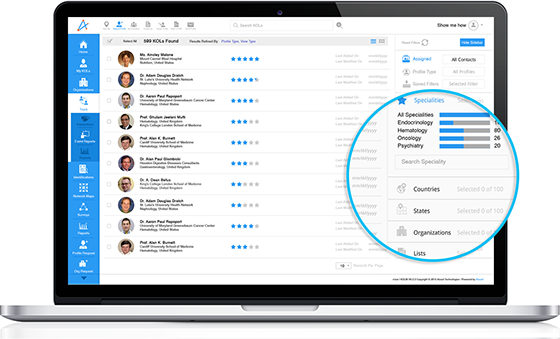
konectar’s segmentation capabilities help teams move beyond static physician lists and build dynamic, insight-driven engagement strategies. With konectar, teams can:
Segment KOLs Based on Strategic Objectives
Users can create customized segments aligned with specific business goals such as clinical trials, advisory boards, publication planning, or speaker programs.
Identify Emerging Experts
AI-driven analytics help uncover rising experts and niche influencers who may not yet appear in traditional KOL lists.
Track Engagement and Influence Trends
Teams can monitor changing physician activity, collaboration networks, and engagement behavior over time.
Enable Cross-Functional Alignment
Medical affairs and commercial teams can work from a centralized source of KOL intelligence, reducing silos and duplication.
Improve Engagement Planning
With smarter segmentation insights, organizations can personalize outreach and improve physician relationship quality.
By turning disconnected physician data into actionable intelligence, konectar helps life sciences teams make faster and more informed engagement decisions.
A smarter segmentation strategy thus enables organizations to identify the right experts, align them with the right objectives, and build stronger physician relationships through data-driven engagement.
If your organization is looking to improve physician engagement, explore how konectar can help transform your KOL strategy.
FAQs
- What is KOL segmentation in life sciences?
KOL segmentation is the process of categorizing healthcare experts based on factors such as scientific expertise, influence, engagement behavior, digital presence, and strategic relevance to specific organizational goals.
- Why is traditional KOL segmentation no longer sufficient?
Traditional segmentation often relies heavily on publication counts and institutional reputation. Modern physician influence extends beyond academic visibility into digital engagement, peer networks, and real-world clinical impact.
- How does an AI-Powered KOL Management Platform improve KOL segmentation?
The platform helps analyze large volumes of physician data to identify emerging experts, uncover hidden influence networks, recommend engagement opportunities, and improve strategic targeting.
- Can KOL segmentation improve physician engagement?
Yes. Smarter KOL segmentation allows organizations to align experts with appropriate engagement objectives and strengthen long-term relationships.
Read Next
Did your regulatory submission and now waiting for the approval? You may find this blog useful - Find Your KOLs Before You Need Them: A Pre-Market Imperative for Biotech and Pharma Teams


Recommended